
NIS2 is here: why EU cybersecurity compliance is no longer just an IT problem
NIS2 puts cyber risk on the board agenda: who's in scope, the 24-hour reporting clock, supply-chain duties, fines and a 5-step checklist to prepare.
Contents
The end of check-the-box security
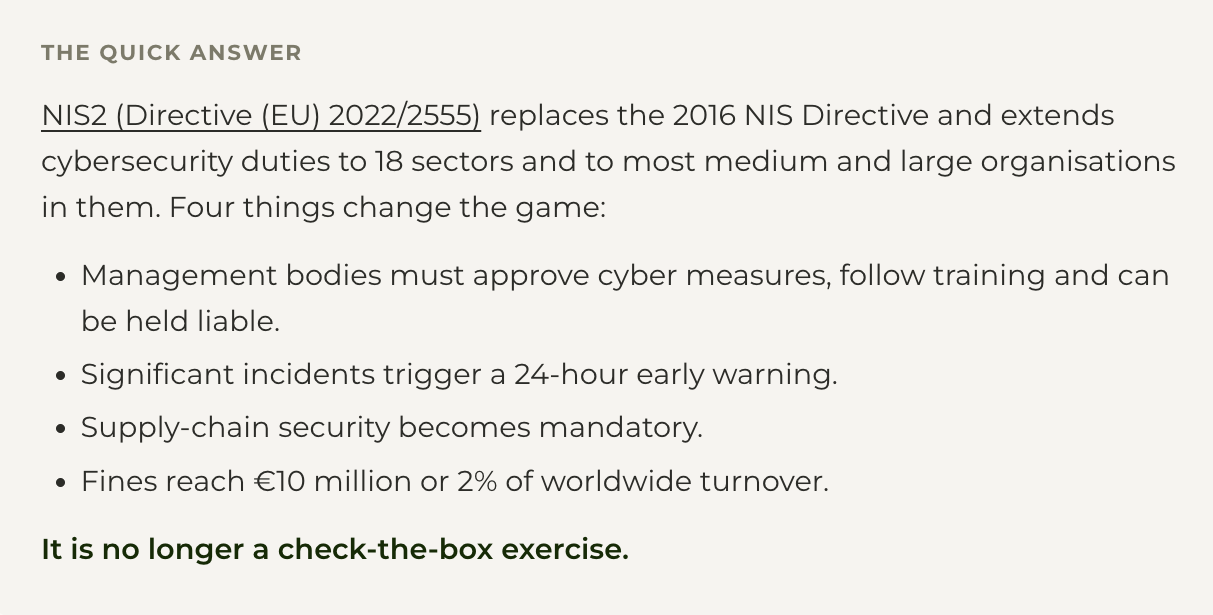
NIS2 is the most comprehensive overhaul of European cybersecurity law in a decade. Its predecessor left Member States wide discretion over who was covered, which produced uneven protection and weak links across critical infrastructure and the digital economy. NIS2 closes those gaps with harmonised scope rules, a common list of risk-management measures and a common reporting timeline.
The transposition deadline was 17 October 2024, and most Member States missed it. By mid-2026 the picture had largely caught up: on 8 July 2026 the European Commission said most Member States had complied, and referred the four that had not — Ireland, Spain, France and the Netherlands — to the Court of Justice. Germany’s implementing act entered into force on 1 October 2026. For most organisations, the question is no longer whether NIS2 applies, but which national version does.

1. Who is affected? Far more companies than before
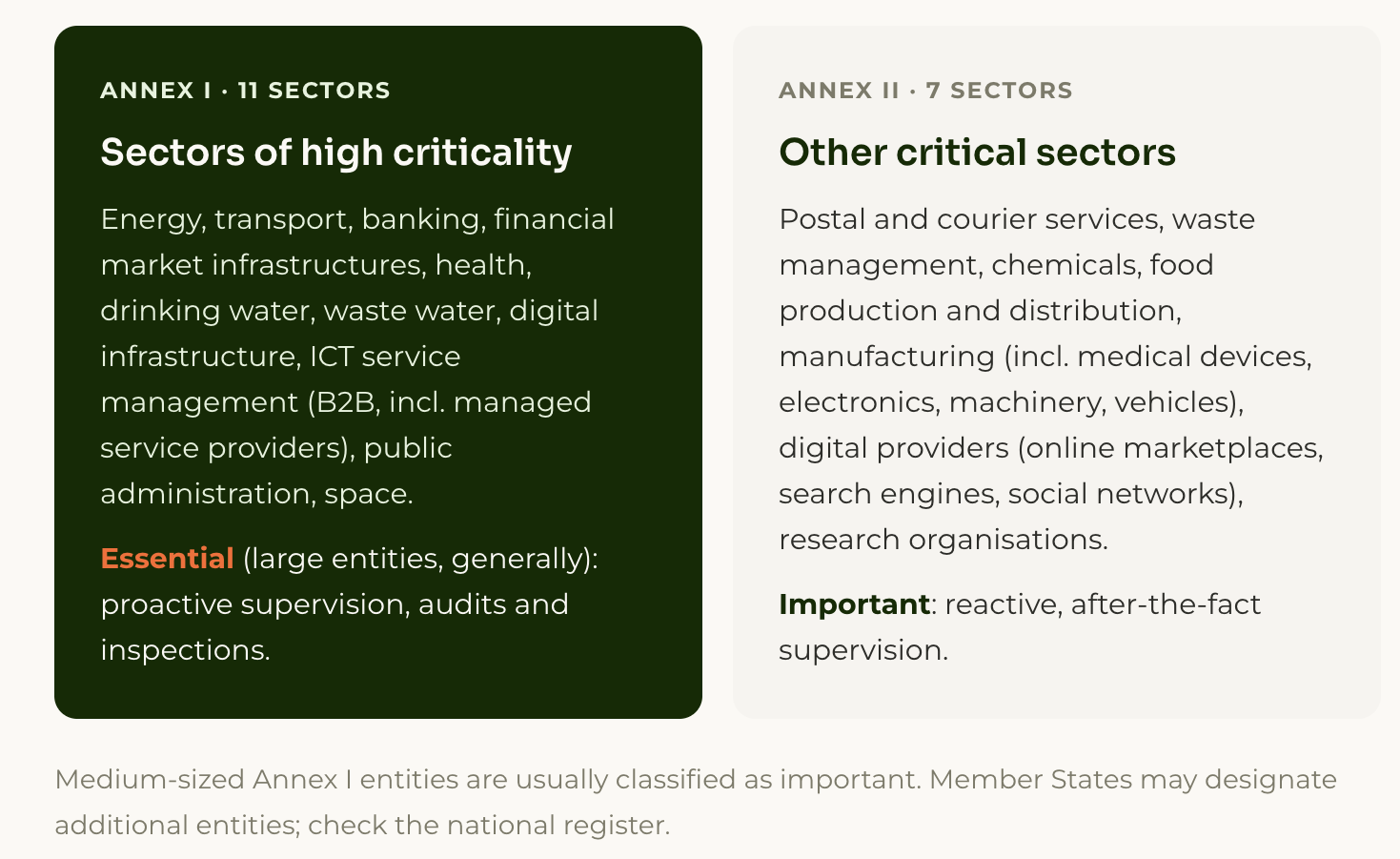
NIS2 covers 18 sectors and, as a rule, captures medium and large organisations — generally 50 or more employees, or more than €10 million in annual turnover and balance sheet. Some entities are in scope regardless of size, such as DNS service providers, trust service providers and providers of public electronic communications.
2. The four biggest game-changers
“All staff” is rarely the right audience. A board member needs NIS2 governance training; an HR partner needs pay-transparency handling; a developer needs Article 50. Map obligations to roles and jurisdictions, and remember the people outside your HR system: the AI Act’s literacy duty covers anyone operating AI systems on your behalf, which pulls contractors inside the scope.
Why this is a training problem, too
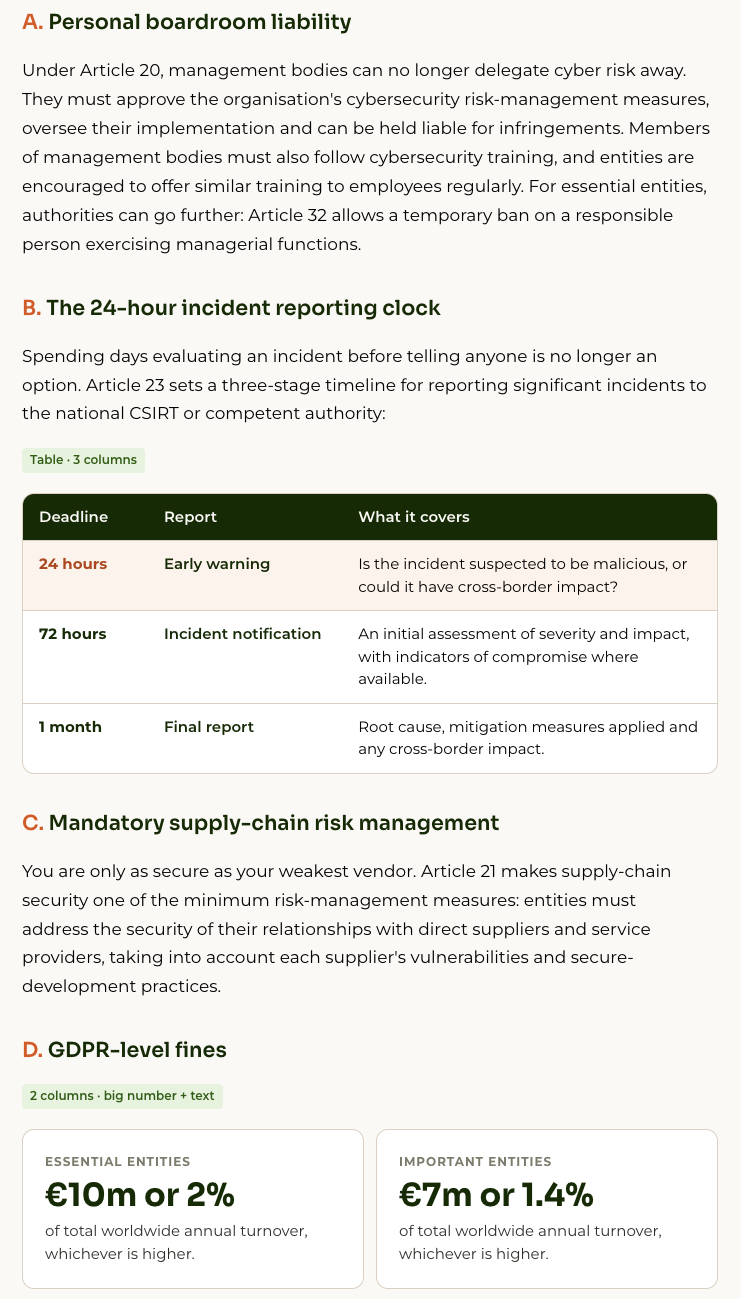
Read Articles 20 and 21 together and a pattern emerges. NIS2 doesn’t just ask for firewalls; it asks for people who understand the risk:
- Boards have to be trained well enough to approve measures they are personally accountable for.
- Article 21 lists basic cyber hygiene and cybersecurity training among the minimum measures.
- The 24-hour clock only works if whoever spots the incident knows, without looking it up, that it has started.
There is a second, quieter problem: NIS2 is not one law. It is 27 national laws with different registration windows, authorities and, sometimes, a broader scope than the directive. An organisation operating in several Member States has to keep track of all of them — and of the implementing acts and guidance that keep arriving after transposition.
Where Lexstream fits
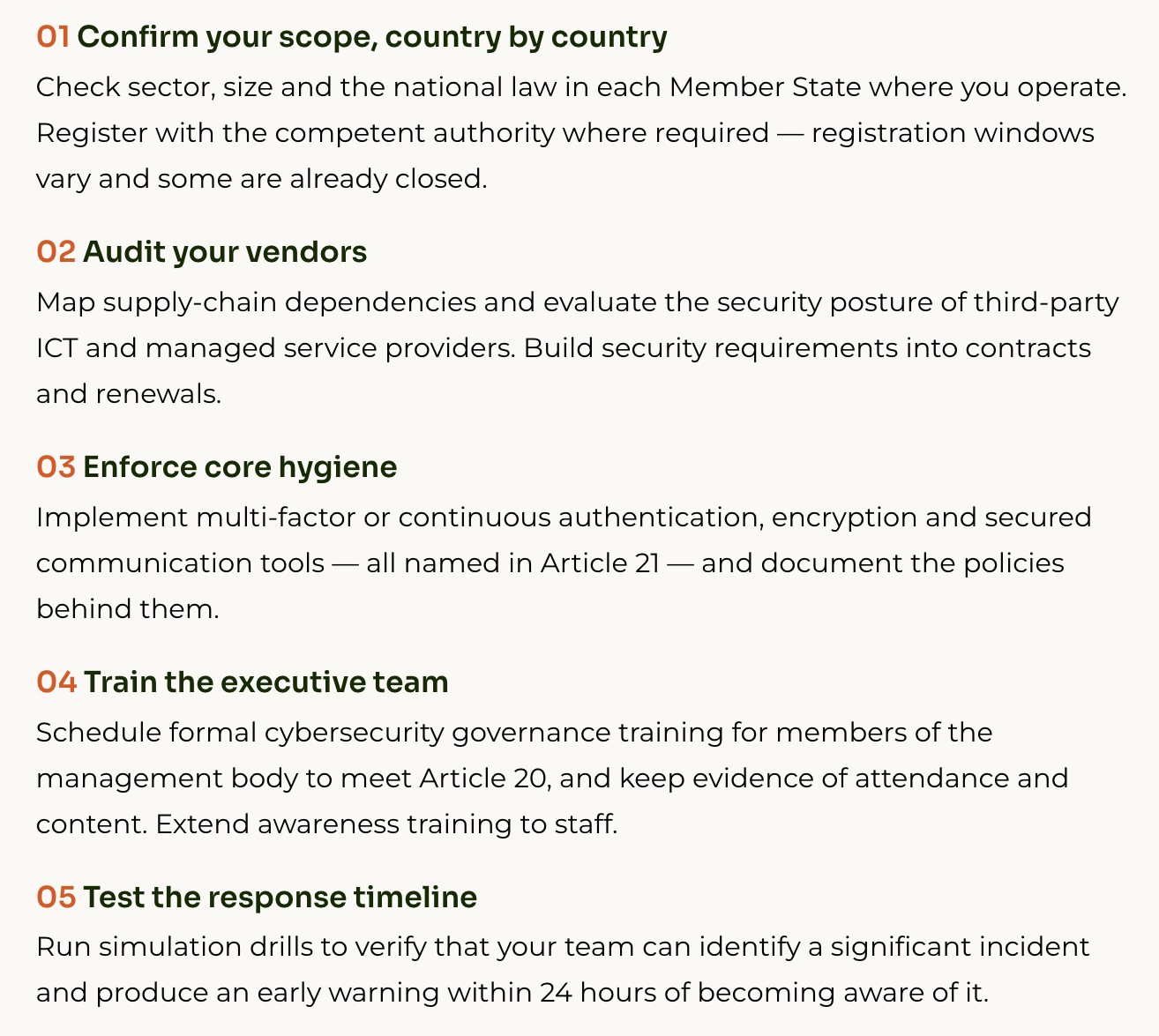
3. Actionable checklist: how to prepare today
Conclusion: compliance as a competitive advantage
NIS2 shouldn’t be seen only as a regulatory burden. With ransomware and supply-chain attacks now systemic threats, being able to demonstrate compliance is a strong way to build trust with enterprise clients, partners and investors — many of whom will be asking under their own Article 21 obligations anyway.
The organisations that do well under NIS2 will be the ones that treat it as a leadership question, not a ticket for IT.
General information, not legal advice.